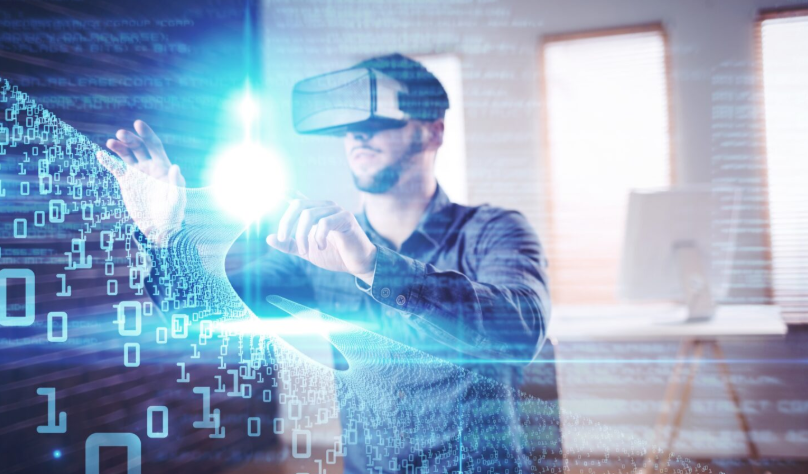

Immersive technology is reshaping professional landscapes by introducing innovative tools that enhance collaboration and training. Industries such as healthcare, education, and real estate are witnessing significant improvements in skill development and client engagement. These advancements allow for risk-free simulations and interactive experiences that foster critical thinking. However, the implications of this transformation extend beyond mere efficiency. What challenges and opportunities lie ahead as organizations adapt to these immersive solutions?
Transforming Healthcare Through Immersive Solutions
Immersive technology is revolutionizing the healthcare sector by introducing innovative solutions that enhance patient care and medical training.
Virtual surgery applications allow surgeons to practice intricate procedures in a risk-free environment, while patient simulation tools provide realistic scenarios for trainees.
These advancements not only improve surgical skills but also foster a deeper understanding of patient interactions, ultimately leading to better healthcare outcomes.
See also: How Wearable Tech Tracks Human Behavior
Enhancing Education With Virtual and Augmented Reality
As educators seek innovative methods to engage students, the integration of virtual and augmented reality (VR and AR) into the classroom is emerging as a transformative approach.
Virtual classrooms enhance learning experiences, allowing students to explore complex subjects interactively.
Augmented learning further enriches this environment, bridging theoretical knowledge with practical application, thereby fostering deeper understanding and critical thinking skills essential for success in a dynamic world.
Revolutionizing Customer Engagement in Real Estate
While traditional methods of customer engagement in real estate have relied heavily on in-person interactions and static presentations, the advent of virtual and augmented reality technologies is fundamentally reshaping how clients experience property listings.
Virtual property tours provide immersive, interactive client experiences, enabling prospective buyers to explore spaces from anywhere. This shift not only enhances engagement but also empowers clients with unprecedented freedom in their property search.
The Future of Work: Embracing Immersive Technology Across Industries
With the rapid evolution of technology reshaping workplace dynamics, industries are increasingly integrating immersive solutions to enhance collaboration and productivity.
This shift supports remote collaboration, allowing teams to interact seamlessly across distances.
Furthermore, immersive technology plays a vital role in skills training, providing experiential learning opportunities that enhance employee competence.
As organizations embrace these innovations, they pave the way for a more dynamic future of work.
Conclusion
In conclusion, immersive technology is reshaping professional industries by fostering collaboration and enhancing learning experiences. A noteworthy statistic reveals that 70% of organizations believe that virtual reality training significantly improves employee retention of information compared to traditional methods. This compelling figure underscores the effectiveness of immersive solutions in developing skills and engaging clients. As industries continue to adopt these innovative technologies, the potential for increased productivity and transformative advancements remains vast, signaling a dynamic future ahead.